Deciding on a foundation was not as easy I thought. The problem is that in our area concrete is well over 200 dollars per cubic meter. At that price, having a concrete pad for a garage immediately becomes about a third of the overall cost of the project. Building concrete footers with a gravel pad would have been cheaper but ultimately not very convenient for a heated garage. In the end, I decided to go with a concrete pad and industrial base plate connectors for the building.
Now, when I grew up the farm, I would have just gone to the shop started up the tractor and begun excavating. Not having access to that equipment means renting equipment or hiring someone. As much as I wanted this to be a DIY project, I decided to hire someone to do the concrete work. Also, growing up I always had access to gravel. We either had it stockpiled, or had veins of gravel that could be dug up somewhere on our farm. In addition to hiring someone to do the concrete, I had to find gravel.
I hired Joel Funk and Strong Built Construction from Wymark, Saskatchewan to excavate the site, build the forms and pour and finish the concrete. It turns out that there was an old garage on my build site that had about 4-5 cubic metres of gravel. I needed about 10 and was able to purchase 6 cubic metres from a stockpile that a farmer had in Vanguard.
Just prior to pouring the concrete, I had toyed with the idea of putting in-floor electric heating cable (embedded in the concrete) from a company called flex-therm. The company estimated that I would need about 7300 watts to heat the building and that the cost would have been around 2000 dollars for the installation. Before I made the investment, I had electricians come out to survey the site and put together an estimate for the later wiring of the building. When I asked about flex-therm, neither electrician had heard of the product. They were sceptical that it would heat the building but told me they would look into it. After a couple of days one of the electricians called me back and advised against flex-therm for this particular purpose. He didn’t think it would work as a primary heat source for a building this size and height in our climate. Needles to say, I didn’t take a chance on the flex-therm product this time. The upside was that I saved 2K, plus pouring the concrete pad was a much easier process.
Excavation of the site began the second week of May. Gravel was hauled in, and forms built soon thereafter. After waiting for some sunny days in the forecast, the concrete arrived, was poured an finished. Unfortunately I didn’t get to see most of this process, as I was at work. One day, I came home and the pad was just there.
Here is what the process looked like.
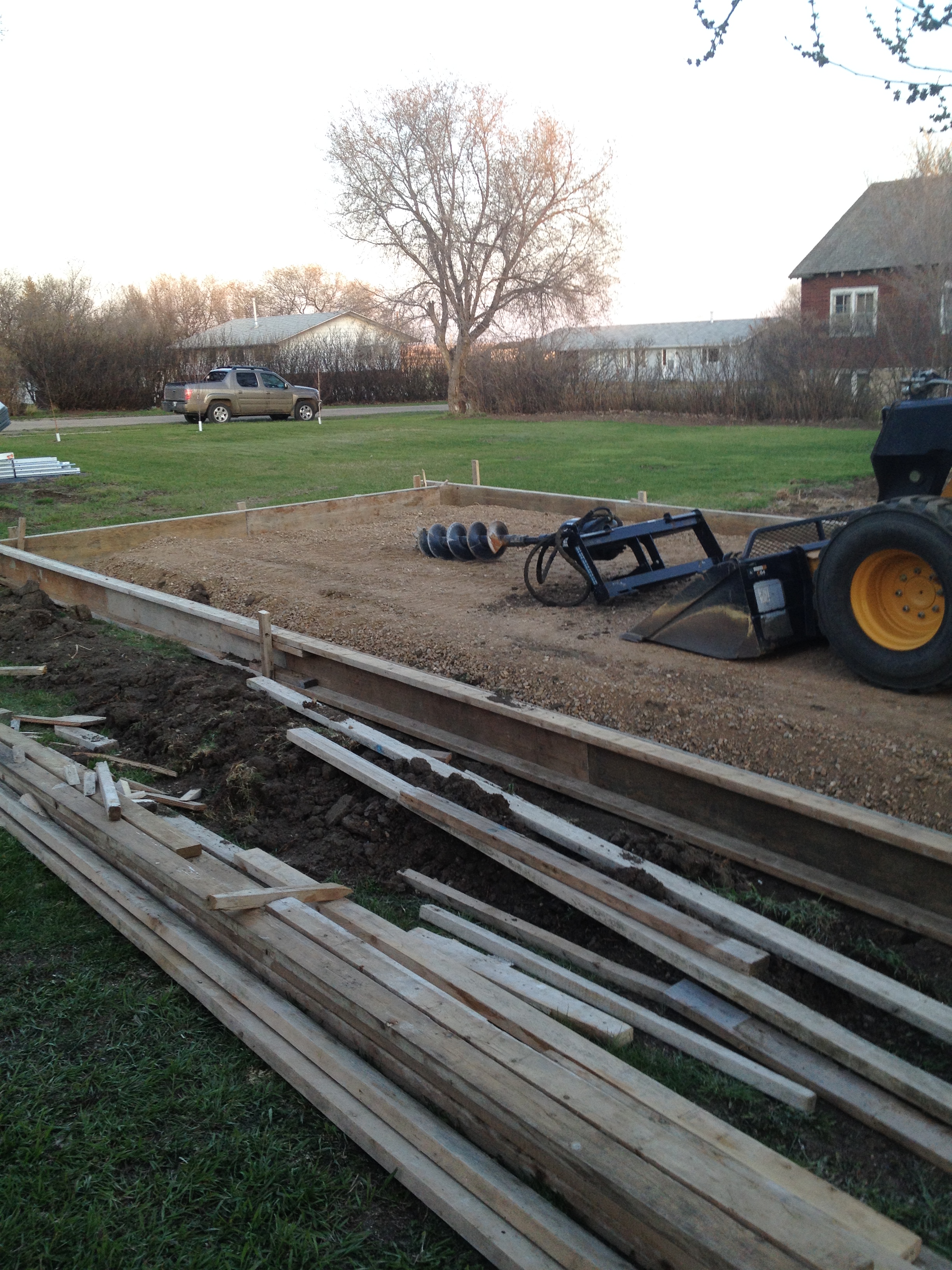
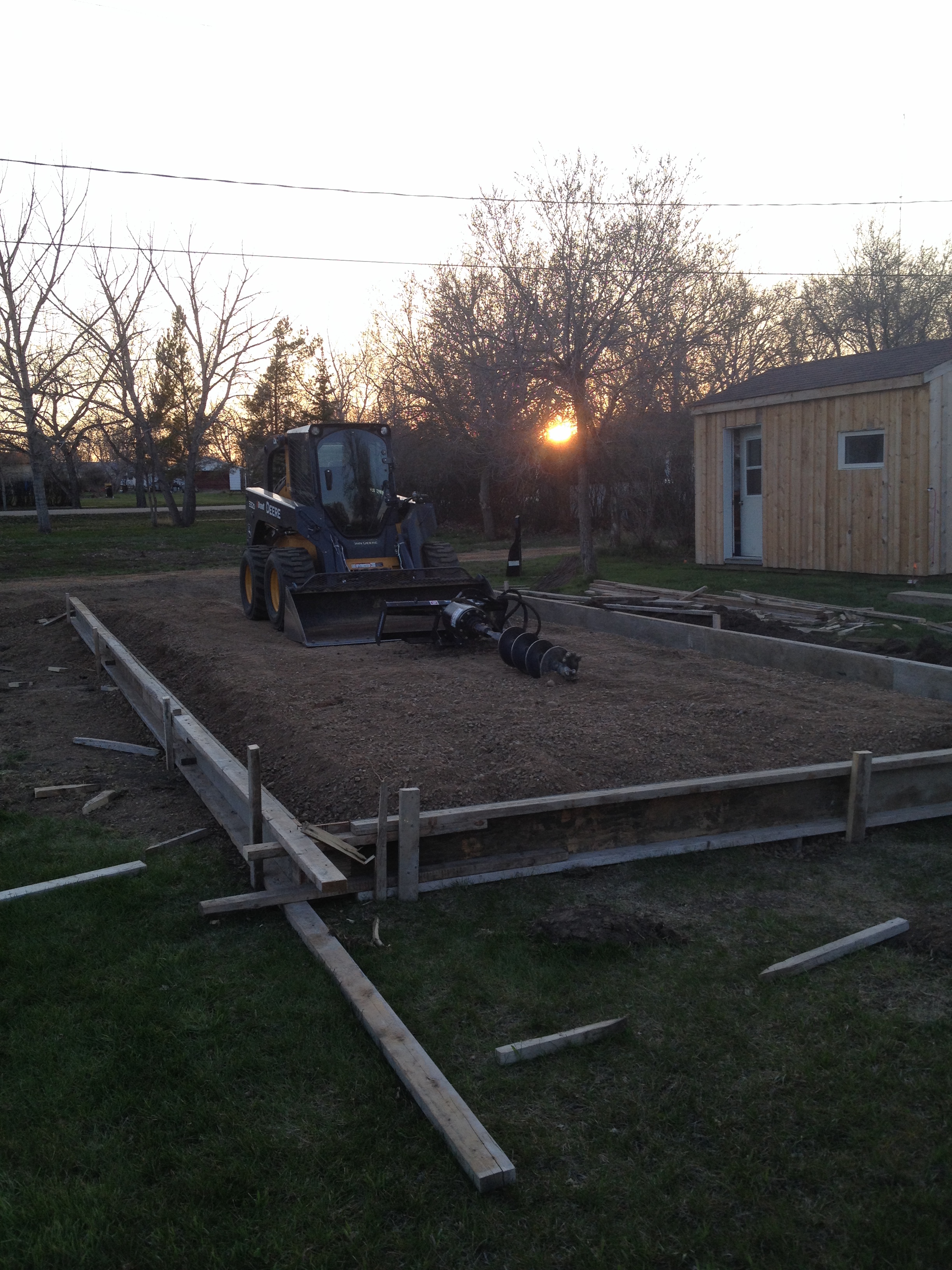
Waiting for the concrete:
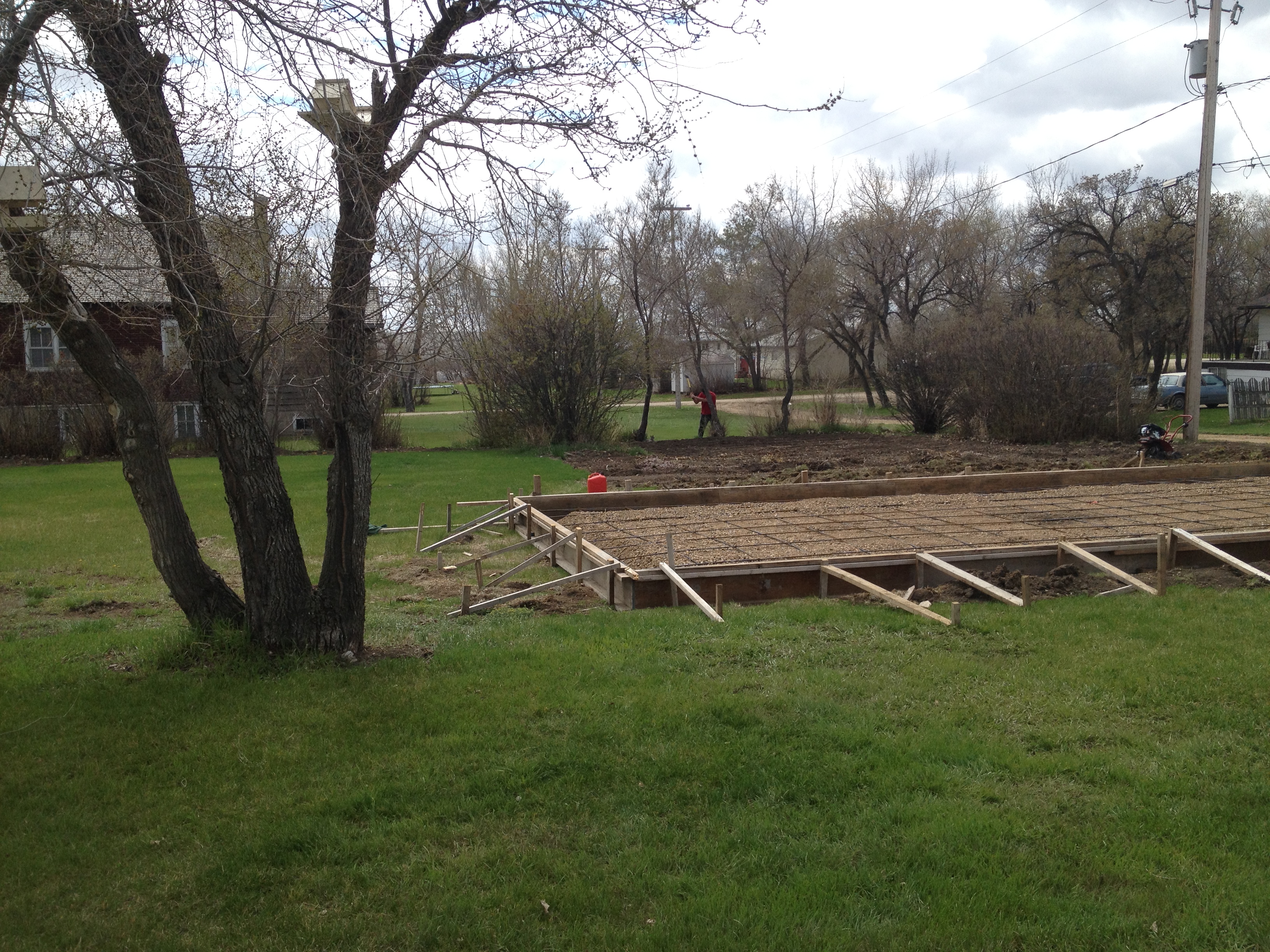
The finished pad.

Next: Baseplate connectors.

 Backyard Building
Recent Comments